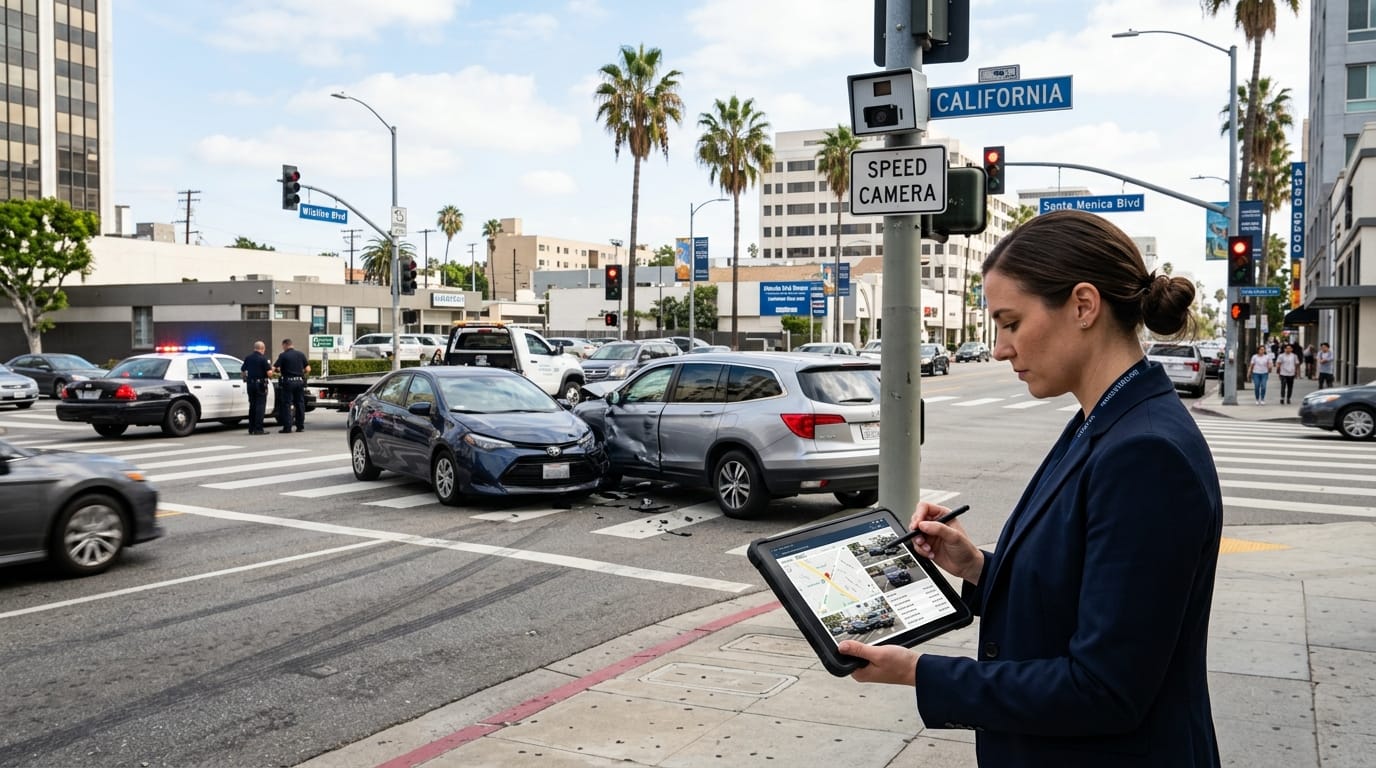
Speed camera accident claims are becoming more relevant in California as automated speed enforcement expands through pilot programs in major cities. For accident victims, this trend matters because speed often plays a major role in crash severity, fault disputes, and settlement value. When a driver speeds through a high-risk corridor, near a school zone, or along a street with a history of serious crashes, automated speed records may become part of the evidence conversation.
California’s speed safety camera pilot does not replace traditional accident investigations. A camera citation alone does not prove every detail of a crash. However, speed data can help support a larger evidence package when combined with police reports, dashcam footage, witness statements, vehicle damage, medical records, and black box data. In a disputed claim, that extra proof may help show that a driver’s unsafe speed contributed to the collision.
The main issue is simple. Insurance companies often argue over fault. They may say the crash was unavoidable, that both drivers shared blame, or that the injuries were not related to the collision. Strong evidence can push back against those arguments. That is why speed camera accident claims deserve attention in 2026.
Accident-Attorney.net already covers related evidence topics in California Dashcam and Black Box Evidence in 2026. This guide focuses specifically on speed cameras and how automated enforcement may fit into a personal injury claim.
Why Speed Cameras Matter In California Accident Claims
Speed changes everything in a crash. A faster vehicle needs more distance to stop, gives the driver less time to react, and can cause more severe injuries on impact. Pedestrians, cyclists, motorcyclists, and occupants of smaller vehicles face especially serious risks when a speeding driver causes a collision.
California’s speed camera pilot focuses on selected cities and high-risk areas. The goal is traffic safety, but accident victims may also care about the records these systems create. If a crash happens near an automated enforcement location, the available data may help answer an important question: was a driver traveling too fast for the area?
Speed cameras may support a fault argument
In a car accident claim, the injured person usually needs to show that another party acted carelessly and caused harm. Speeding can support that argument. A driver who travels well above the limit may have less ability to avoid stopped traffic, a pedestrian in a crosswalk, a cyclist, or a vehicle making a legal turn.
Speed evidence can become especially useful when the at-fault driver denies responsibility. A driver may claim they were “going with traffic” or “not speeding that much.” Objective records can challenge that statement. If automated data, dashcam footage, or event data shows unsafe speed, the claim may become harder for an insurer to minimize.
Speed evidence should be part of a bigger proof package
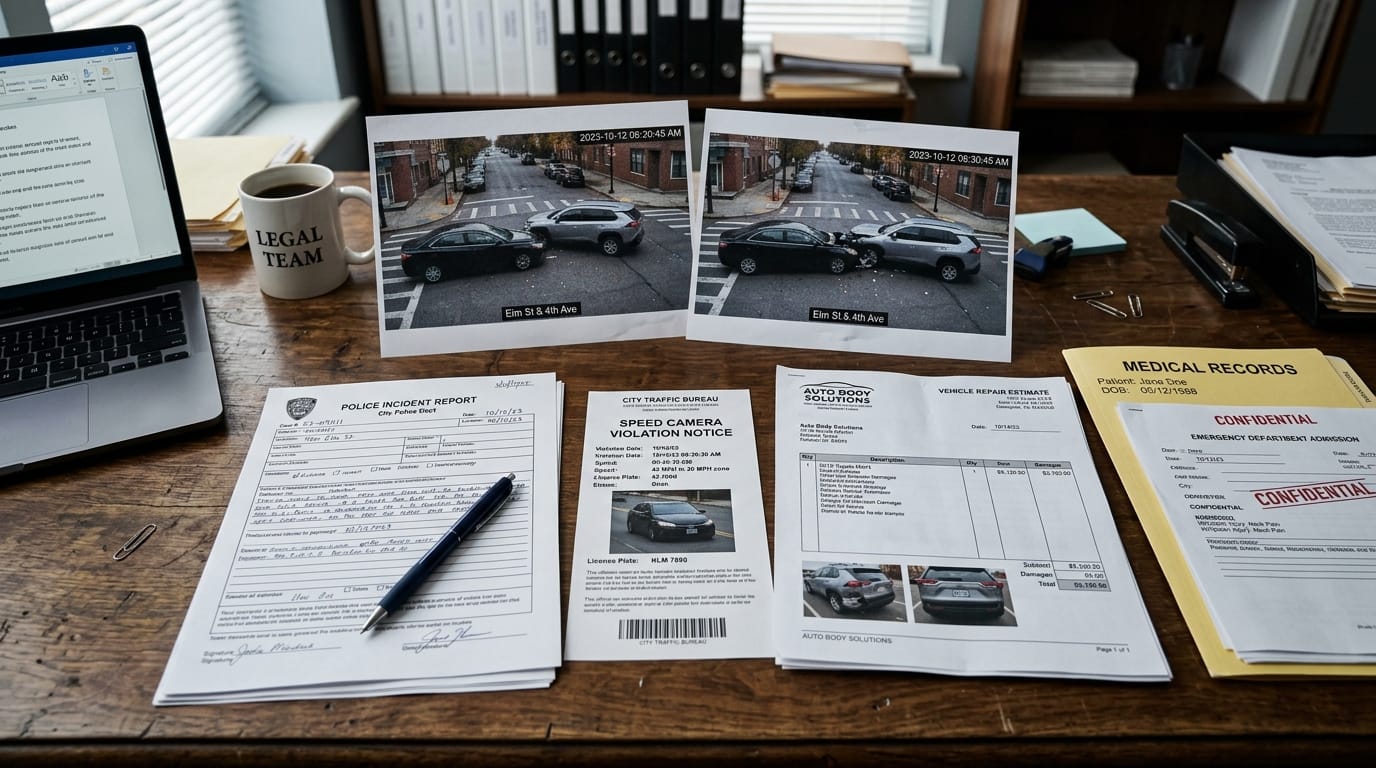
A speed camera notice should not be treated as the whole case. Injury claims need more. Victims should collect police reports, photos, videos, witness names, medical records, repair estimates, wage loss records, and insurance letters. If the vehicle has event data, that information may also help show braking, speed, steering, and impact timing.
Accident-Attorney.net’s guide on what to do after a car accident is a useful companion because fast action can protect evidence before it disappears.
Camera citations are not full accident reports
A speed camera may show that a vehicle exceeded the speed limit. It may not show every cause of the crash. It may not explain lane changes, distraction, impairment, road hazards, poor visibility, vehicle defects, or another driver’s unsafe move. That is why accident victims should avoid oversimplifying the case.
Insurance companies may also challenge how the speed evidence applies. They may argue that the citation happened before or after the crash, that the speeding vehicle was not the one that caused the impact, or that another driver still shared fault. These disputes make timing, location, and supporting evidence very important.
Comparative negligence can still affect compensation
California follows comparative negligence, which means more than one person can share fault. Even if a speeding driver caused most of the harm, the insurer may still look for ways to blame the injured person. They may argue that the victim crossed outside a crosswalk, braked suddenly, changed lanes poorly, or failed to avoid the crash.
This does not mean the claim is lost. It means evidence matters. A clear timeline, strong photos, medical documentation, and witness statements can help reduce unfair blame. For more background, read Comparative Negligence in California Car Accidents.
How Victims Can Use Evidence After A Speed-Related Crash
Strong speed camera accident claims start with quick documentation. A crash scene changes fast. Vehicles move, debris gets cleared, skid marks fade, and witnesses leave. Camera footage from nearby businesses, homes, buses, rideshare vehicles, or dashcams may also get overwritten within days.
For official background, California’s AB 645 authorized the speed safety system pilot program, and participating cities must follow program requirements. Readers can review the bill information here: California AB 645 Speed Safety System Pilot Program.
What to document after a speed-related accident
Start with the crash location. Take photos of traffic signs, speed limit signs, lane markings, crosswalks, signal lights, road conditions, vehicle positions, debris, skid marks, damage, and nearby cameras. If the accident happened near a known speed camera corridor, record the exact street, intersection, direction of travel, and time.
Medical care comes next. Some injuries appear immediately, while others develop later. Neck pain, back pain, headaches, dizziness, shoulder pain, knee pain, numbness, and concussion symptoms may worsen after the adrenaline fades. Medical records help connect the crash to the injury and protect the value of the claim.
Ask about all possible video sources
Do not assume the only useful camera is the speed camera. Many crashes involve several possible video sources. Dashcams, traffic cameras, security cameras, doorbell cameras, bus cameras, rideshare cameras, and nearby business cameras may all help explain what happened.
Victims should act quickly because video may not stay available. A preservation request may be necessary when a business, city agency, rideshare company, trucking company, or insurer controls the footage. Delays can make valuable evidence disappear before anyone reviews it.
Do not give the insurer room to twist the timeline

Insurance adjusters often look for inconsistencies. If your statement, medical records, photos, and timeline do not match, the insurer may use those gaps to lower the offer. Keep your description simple and accurate. Do not guess about speed, distances, or timing if you are unsure.
Save every document connected to the accident. That includes police reports, claim numbers, repair estimates, medical bills, prescriptions, appointment summaries, work restriction notes, wage loss proof, and messages from adjusters. A clean file makes it easier to challenge a low settlement offer.
Speed camera accident claims will likely become more common as automated enforcement expands in California cities. This does not mean every crash near a camera becomes an easy case. It means victims and attorneys may have one more evidence source to review when speed plays a role.
If you were injured in a California crash involving a speeding driver, do not rely only on what the other driver says. Document the scene, get medical care, preserve video, request records when possible, and review the full evidence before accepting a settlement. Speed can change both the force of a crash and the strength of a claim, but only if the evidence gets protected early.