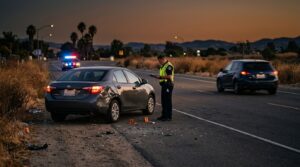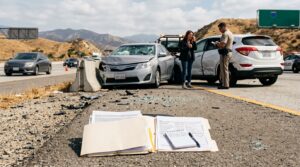
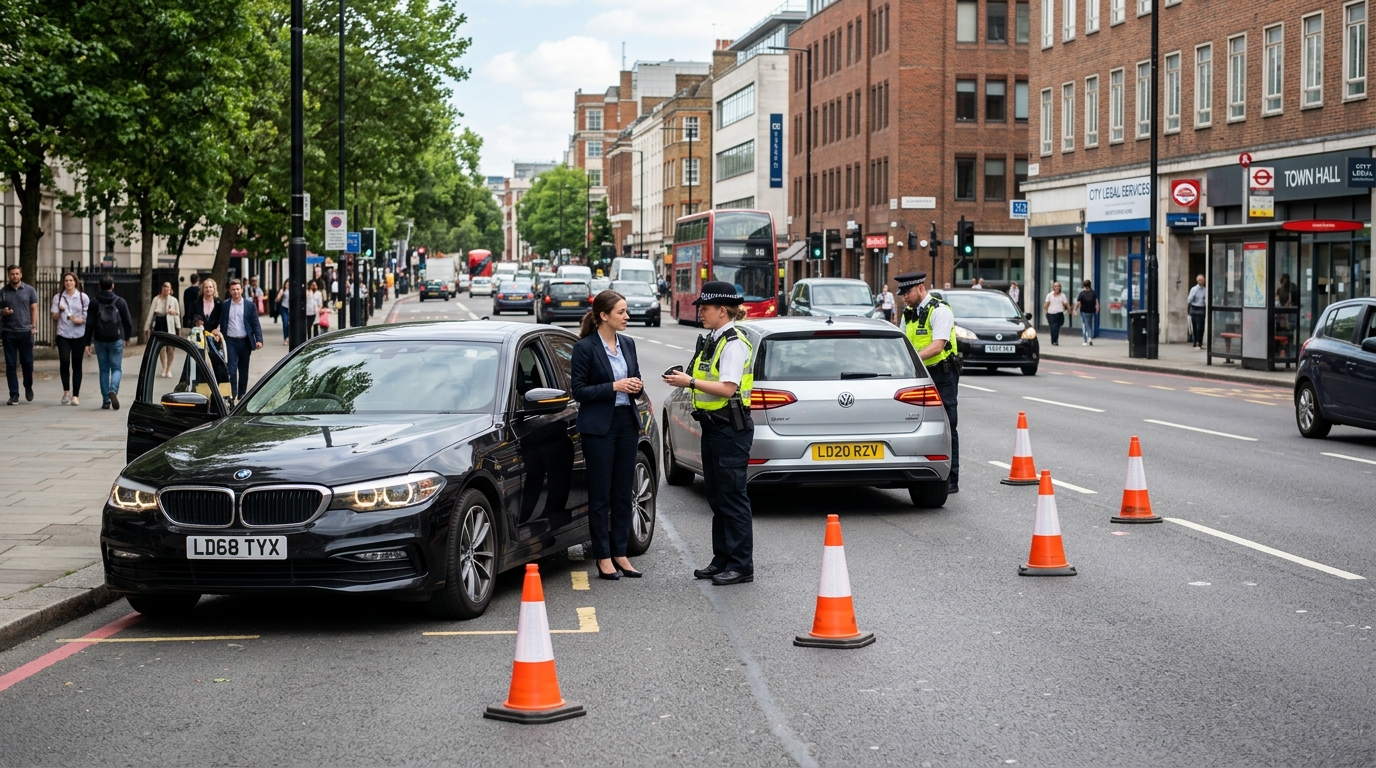
A road rage accident claim can be harder to handle than a normal car accident case. Road rage often involves more than one unsafe move. A driver may tailgate, cut someone off, brake-check another car, speed through traffic, weave across lanes, block a merge, yell, threaten, or chase another vehicle. When that behavior causes a crash, the injury claim may need stronger proof than a basic rear-end collision case.
In 2026, road rage and aggressive driving remain serious concerns. Drivers face crowded roads, distracted motorists, long commutes, delivery pressure, rideshare traffic, and daily stress. Those factors do not excuse dangerous driving. A driver who lets anger take control can cause serious injuries in seconds.
The legal issue is simple. Did aggressive driving cause or contribute to the crash? If yes, the injured person may pursue compensation for medical bills, lost income, pain and suffering, vehicle damage, future care, and other losses. The challenge is proving what happened before impact.
Road rage cases often become disputed because the at-fault driver may deny anger, blame the victim, or claim the crash was unavoidable. Insurance companies may also argue that both drivers acted aggressively. That is why evidence matters from the start.
Why Road Rage Accident Claims Are Different
A road rage crash is not always a single mistake. It may involve a pattern of unsafe conduct. The driver may follow too closely for several blocks. They may swerve between lanes. They may speed up to prevent another vehicle from merging. They may brake suddenly to scare another driver.
This pattern can make the case more serious. It may show reckless behavior instead of simple carelessness. It may also help explain why the crash happened and why the injuries were severe.
The National Highway Traffic Safety Administration connects aggressive driving with speeding and unsafe road behavior. NHTSA also reports that speeding contributed to 29% of all traffic fatalities in 2024. You can review its safety guidance here: NHTSA Speeding and Aggressive Driving Prevention.
Speed matters because it reduces reaction time. It also increases impact force. A road rage driver who speeds, tailgates, or makes sudden lane changes creates danger for everyone nearby.
Aggressive driving can help prove negligence

Most injury claims depend on negligence. The injured person must show that another driver failed to use reasonable care. Aggressive driving can support that argument.
A driver who tailgates, races through traffic, makes unsafe lane changes, or brake-checks another car does not act reasonably. That conduct may violate traffic laws. It may also show a disregard for public safety.
A road rage accident claim may use several types of proof. Police reports can record unsafe driving. Witnesses can describe yelling, chasing, tailgating, or sudden braking. Dashcam footage can show the full sequence. Vehicle data may show speed, braking, and steering before impact.
Your site already has a strong related article on California dashcam and black box evidence in 2026. That internal link fits well because road rage cases often depend on video and vehicle data.
Tailgating, brake-checking, and unsafe lane changes
Tailgating is one of the most common aggressive driving behaviors. It leaves little room to react. If traffic slows suddenly, the rear driver may crash into the vehicle ahead. Even when the front driver acts badly, the tailgating driver may still share fault.
Brake-checking creates another problem. A driver may hit the brakes to scare or punish another motorist. That action can cause a rear-end crash, chain-reaction collision, or loss of control. Dashcam footage can be powerful evidence in this situation.
Unsafe lane changes also matter. An angry driver may cut across lanes without signaling. They may block another vehicle or force a driver onto the shoulder. These facts can support a fault argument when witnesses or video confirm the behavior.
Speeding can increase fault and injury severity
Speed often turns a close call into a major crash. A fast driver needs more distance to stop. They also have less time to avoid hazards. When road rage and speeding combine, the danger rises quickly.
Speed evidence may come from dashcams, black boxes, telematics, police reports, road cameras, or witness statements. Your site’s guide on California speed camera accident claims in 2026 is a strong internal support link here.
Insurance companies may argue that speed did not cause the crash. They may also claim the injuries came from another source. Strong evidence can answer those defenses. It can show how fast the driver traveled, how little time they had to react, and how the impact occurred.
Road rage cases often involve shared fault arguments
Insurance companies rarely accept full blame right away. In road rage cases, they may argue that both drivers escalated the situation. They may say the victim also honked, gestured, sped up, blocked a lane, or refused to let the other driver pass.
That defense can reduce compensation if it succeeds. California uses comparative fault principles in injury claims. That means a victim’s recovery may drop if evidence shows they share responsibility. For example, a victim who receives part of the blame may still recover compensation, but the amount may decrease.
This is why victims should stay calm after a road rage incident. Do not chase the other driver. Do not confront them. Do not post angry comments online. Focus on safety, medical care, evidence, and the police report.
What if the other driver says you started it?
This accusation is common. A road rage driver may claim the victim caused the conflict. They may say the victim cut them off, brake-checked first, drove too slowly, or refused to merge. Sometimes they say this even when it is false.
Evidence can protect the claim. Dashcam footage may show the sequence clearly. Witnesses may confirm who acted aggressively. Vehicle damage can also reveal the crash pattern. Police bodycam footage, 911 calls, and nearby security cameras may add more support.
A victim should avoid guessing or exaggerating. Give a clear timeline. Explain what the other driver did. Describe the crash location, lane positions, speed, signals, and any threatening conduct. Small details can matter later.
How to Protect a Road Rage Accident Claim
After a road rage crash, safety comes first. Move to a safe area if possible. Call 911 if anyone feels hurt, threatened, or unsafe. Do not confront the aggressive driver. Anger can continue after the crash, and direct arguments may make the situation worse.
When police arrive, explain the aggressive driving behavior clearly. Mention tailgating, brake-checking, chasing, weaving, threats, speeding, unsafe lane changes, or blocking. Ask officers to document witness information when possible.
Take photos and videos if you can do so safely. Capture vehicle damage, road markings, traffic signs, skid marks, debris, lane layout, weather, lighting, and nearby cameras. If the other driver continues to yell or threaten, avoid recording in a way that puts you at risk.
Medical care is also important. Road rage crashes can cause neck injuries, back injuries, concussions, shoulder injuries, knee trauma, fractures, anxiety, and sleep problems. Some symptoms appear hours later. A prompt medical record helps connect the crash to the injury.
Evidence that can make the claim stronger
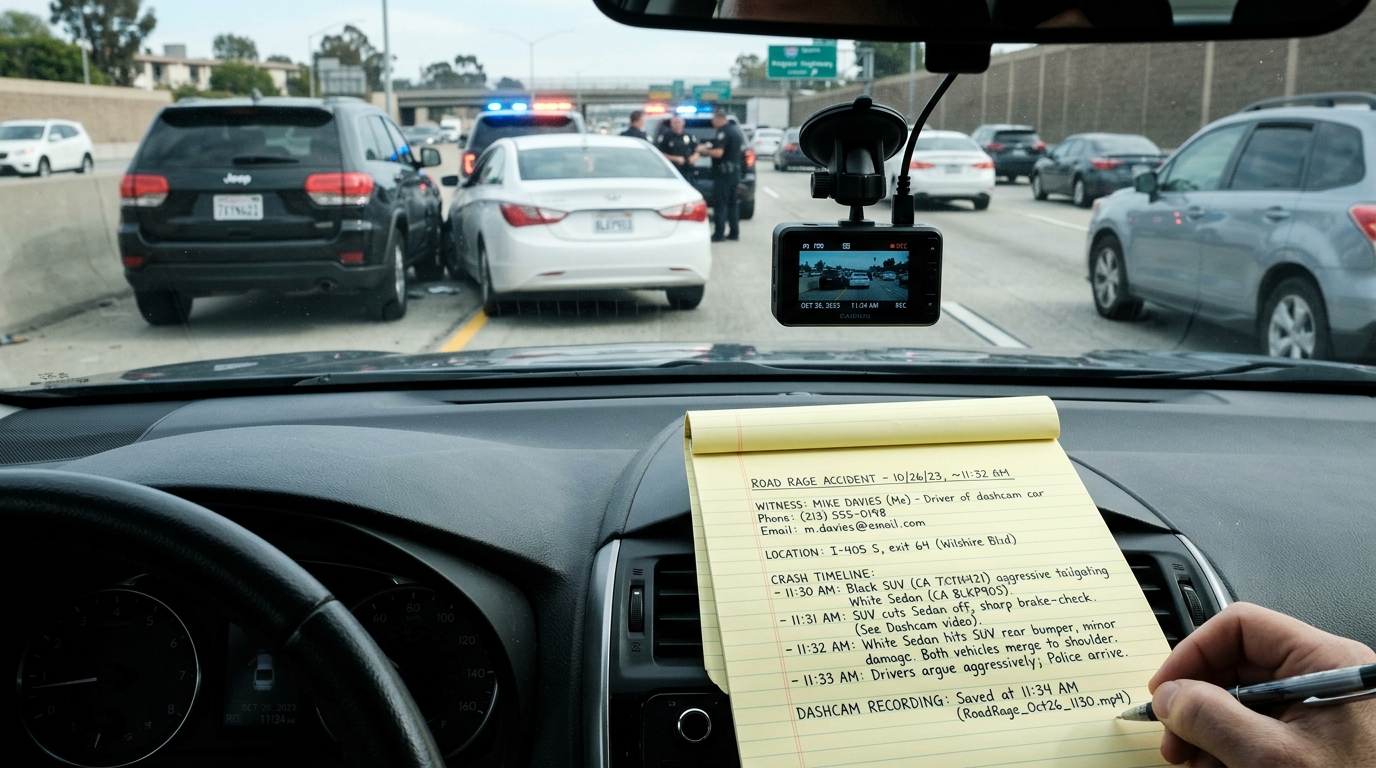
A strong road rage accident claim usually needs more than one piece of proof. Dashcam footage may show the aggressive driving. Witness statements may confirm the behavior. Police reports may document citations or unsafe conduct. Medical records can prove the injury.
Phone photos may help too. They can show damage, location, road conditions, and vehicle positions. If nearby businesses have cameras, write down their names quickly. Many systems delete footage after a short time.
Connected-car data may also matter. Some newer vehicles record speed, braking, steering input, and crash events. Rideshare apps, delivery platforms, and GPS tools may create additional location records. These details can help prove how the crash developed.
Your article on distracted driving accident claims in 2026 can support this section. Both distracted driving and road rage cases often depend on digital evidence, phone records, and telematics.
Do not give a rushed statement to insurance
Insurance adjusters may call soon after the crash. They may ask friendly questions. Still, their goal is to protect the insurer. In a road rage case, small statements can create problems.
An adjuster may ask whether you honked, changed lanes, sped up, or reacted emotionally. They may ask you to estimate distance, timing, and speed. If you guess, the insurer may use your words against you later.
Keep your statements accurate and brief. Do not admit fault without legal advice. Do not minimize your injuries. Do not describe symptoms as “fine” if pain, dizziness, anxiety, or stiffness continues. Medical facts should come from proper treatment, not casual phone comments.
A road rage crash can leave victims with more than vehicle damage. It can cause physical pain, emotional distress, fear of driving, missed work, and long-term treatment needs. The claim should reflect the full harm, not only the repair bill.
Before accepting a settlement, review the evidence and damages carefully. Medical bills, future care, lost income, pain and suffering, property damage, and trauma may all matter. If the driver acted recklessly, the case may deserve a deeper investigation.
A road rage accident claim can turn on proof. The angry driver may deny everything. The insurer may blame both sides. Video, witnesses, police reports, medical records, and vehicle data can help reveal the truth.
If you were injured by an aggressive driver, protect yourself first. Call police, get medical care, preserve evidence, avoid confrontation, and speak with an attorney before signing anything. For more accident claim guidance, visit the personal injury resources on Accident-Attorney.net.