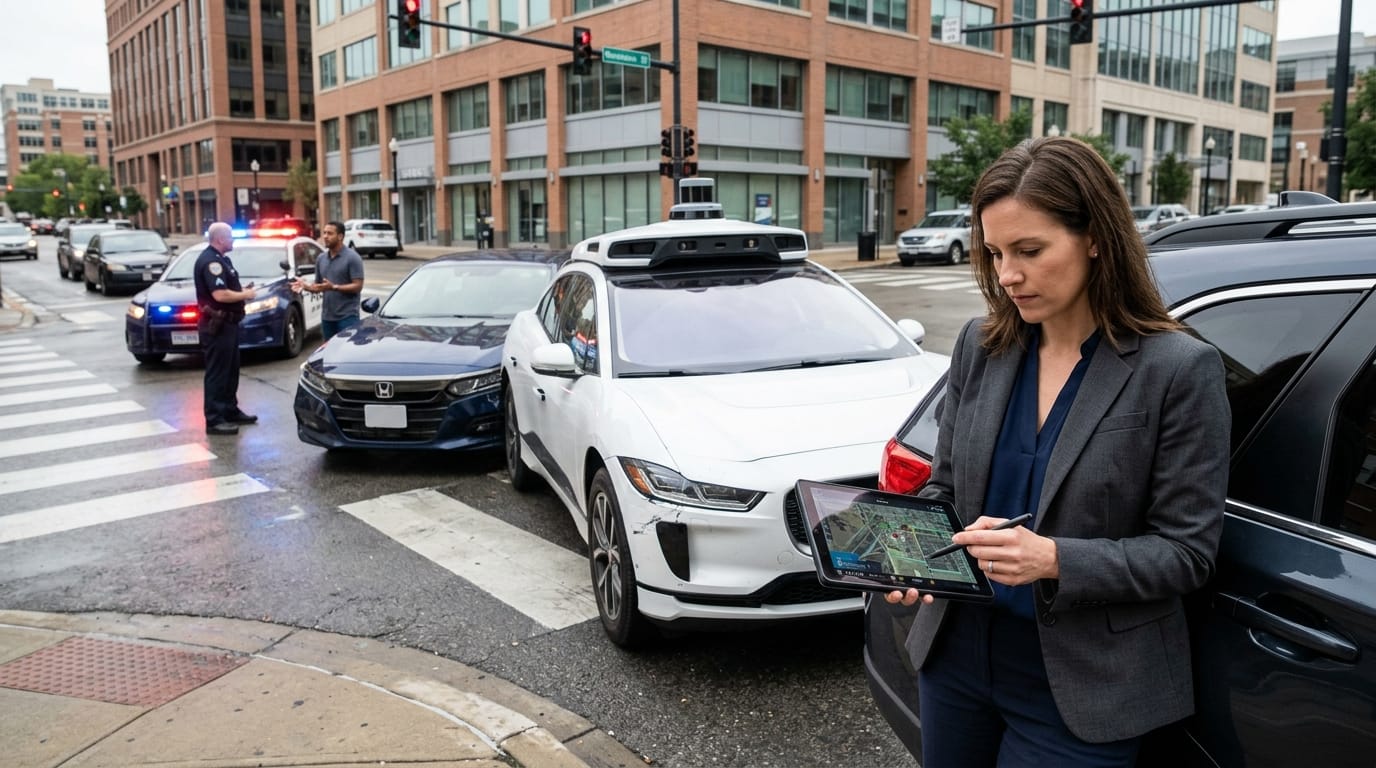
Autonomous vehicle accident claims 2026 cases are becoming more important as robotaxis, driver-assist systems, and connected cars appear on more roads. These cases do not always work like ordinary car accident claims. A crash may involve a human driver, a vehicle owner, a rideshare company, a robotaxi operator, a software developer, a manufacturer, a maintenance provider, or more than one insurance policy.
Many people hear the words “self-driving car” and assume the vehicle handled everything. That assumption can create problems. Some systems still require an alert human driver. Others operate without a traditional driver in specific service areas. The legal question depends on what technology was active, who controlled the vehicle, and what went wrong before impact.
That is why injured people should treat these claims seriously from day one. Modern vehicles can create useful evidence, but that evidence can disappear, change, or become hard to access. A strong claim may depend on crash data, dashcam footage, app records, sensor logs, software updates, maintenance history, and witness statements.
Why Autonomous Vehicle Accident Claims Are Different
A traditional crash often starts with driver behavior. The driver’s speed? They run a red light? Did they text? Did they fail to yield? Those questions still matter in many modern crashes. However, autonomous and driver-assist claims add another layer.
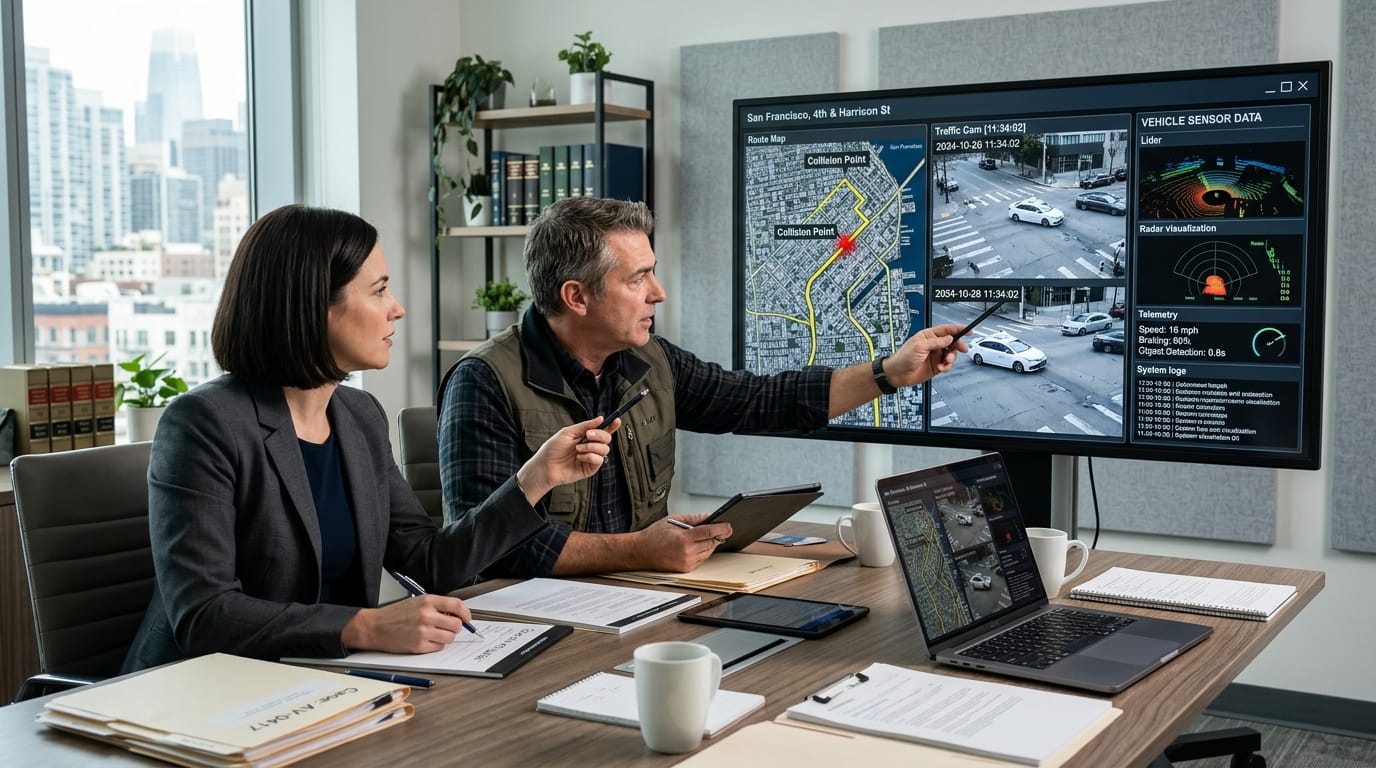
The vehicle may have used cameras, radar, lidar, GPS, maps, braking assistance, lane support, or adaptive cruise control. A rideshare or robotaxi platform may also have trip records, remote monitoring data, and route history. Those records can help show what happened.
Federal regulators also track certain crashes involving automated driving systems and Level 2 advanced driver assistance systems. The National Highway Traffic Safety Administration explains that its Standing General Order helps the agency receive timely notice of real-world crashes involving these technologies. For official background, visit NHTSA’s Standing General Order on Crash Reporting.
For related background on technology in injury cases, read How AI and Technology Are Changing Personal Injury Claims in 2025.
Robotaxi Crashes Can Involve More Than One Responsible Party
A robotaxi crash can raise difficult liability questions. There may be no traditional driver behind the wheel. That does not mean no one is responsible. The claim may focus on the company operating the vehicle, the vehicle manufacturer, the software system, the remote support process, or the company that maintained the car.
Investigators may ask whether the vehicle detected the hazard in time. They may also review whether the system reacted safely, followed traffic laws, yielded correctly, and handled unusual road conditions. If the vehicle stopped in a dangerous place or failed to respond to a pedestrian, cyclist, or emergency vehicle, the data becomes important.
Other drivers can still share fault. A human driver may rear-end a robotaxi, cut it off, speed through an intersection, or ignore a traffic signal. In that case, the claim may involve both human negligence and automated vehicle data.
Fleet Operator Liability
A robotaxi fleet operator may control deployment, maintenance, monitoring, updates, and service rules. If poor fleet practices contributed to a crash, the injured person may need to investigate the operator’s role.
Important questions include whether the vehicle had recent software updates, unresolved safety issues, sensor problems, or maintenance warnings. The investigation may also review whether the company allowed the vehicle to operate in an area where it struggled with construction, school zones, emergency scenes, or complex intersections.
Manufacturer Or Software Liability
Some claims may involve product liability. A defect can involve hardware, software, sensors, braking systems, steering systems, mapping, or warnings. The injured person may need expert review to determine whether the vehicle performed as a reasonably safe product should.
Software issues can be especially complex. A vehicle may follow its programming and still create danger if the system fails to recognize a hazard. A manufacturer may also face questions if it released unsafe updates, ignored known problems, or failed to warn users about limitations.
Driver-Assist Crashes Still Require Human Responsibility
Many vehicles on the road do not drive themselves. They offer advanced driver assistance. These systems may help with speed, steering, braking, lane position, or following distance. However, many still require the human driver to stay attentive and ready to take control.
This distinction matters. If a driver treats a driver-assist system like a fully autonomous vehicle, they may cause a crash. Looking away, using a phone, eating, reaching for items, or assuming the car will solve every problem can create strong evidence of negligence.
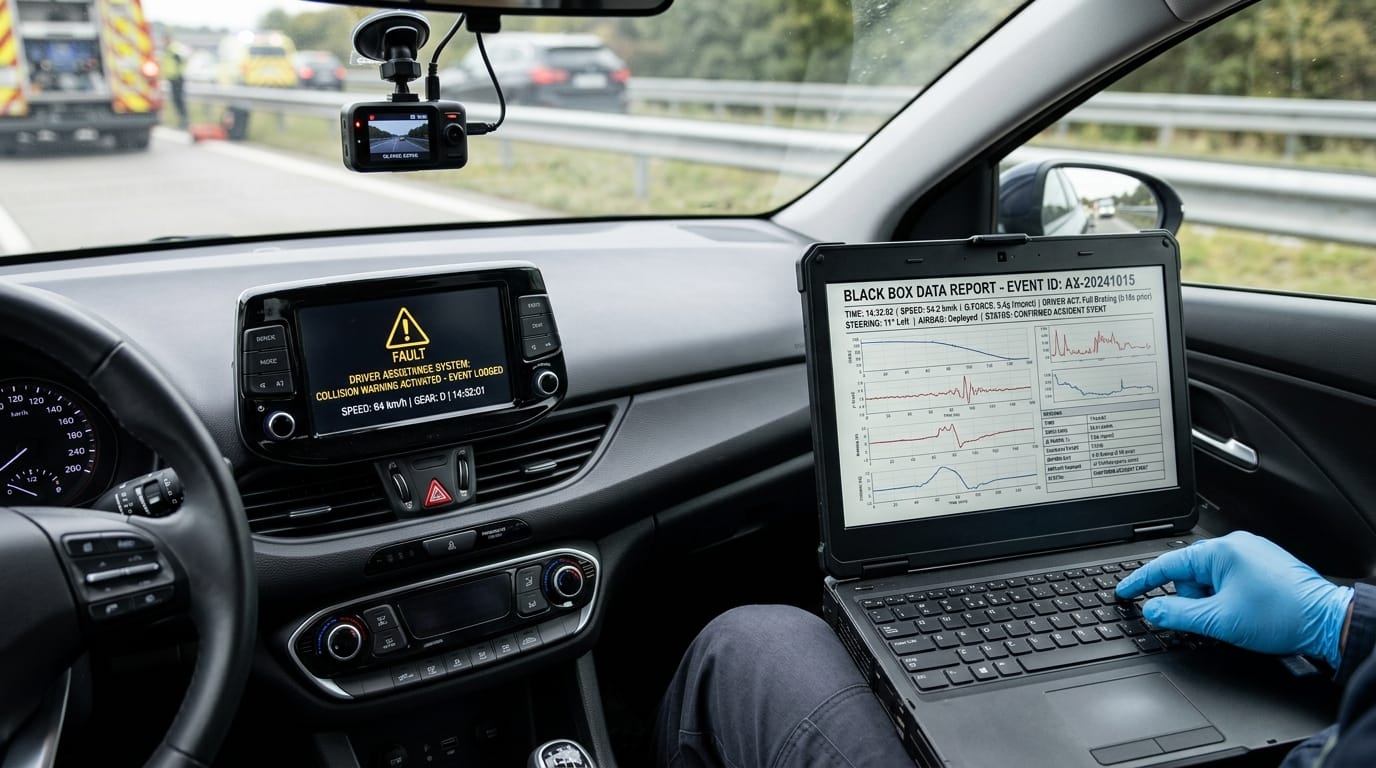
Vehicle data can help prove whether the driver used a feature at the time of the crash. It may also show speed, braking, steering input, warnings, seatbelt use, and impact timing. For more on this type of evidence, read California Dashcam and Black Box Evidence in 2026.
ADAS Evidence Can Change The Fault Analysis
ADAS evidence can support or weaken a claim. It may show whether the system warned the driver, whether the driver ignored alerts, or whether the vehicle failed to detect a hazard. It may also show how fast the car moved before impact.
In some cases, the defense may argue the driver relied too much on technology. In other cases, the injured person may argue the vehicle system failed or gave misleading warnings. Either way, the data needs careful review.
What Injured People Should Do After A Robotaxi Or ADAS Crash
The first step is always medical care. Injuries may not feel serious right away. Concussions, neck injuries, back injuries, shoulder injuries, fractures, and internal injuries can appear later. Medical records help connect the injury to the crash.
After medical needs, evidence becomes the priority. Autonomous vehicle accident claims 2026 cases often depend on records that ordinary drivers cannot access alone. That includes vehicle logs, platform data, internal reports, software records, and camera footage.
Take photos and videos of the scene, vehicles, traffic lights, lane markings, weather, road work, skid marks, debris, and visible injuries. Get witness names and contact information. Save your rideshare receipt, trip screenshot, app messages, medical records, and repair documents.
If the crash involved a rideshare trip, app status may also matter. The driver may have been waiting for a request, heading to pick up a passenger, or carrying a passenger. Each stage can affect insurance. For more detail, read California Rideshare Accident Claims in 2026.
Preserve Digital Evidence Before It Disappears
Digital evidence can disappear faster than people expect. Dashcam videos may overwrite. Security camera footage may delete after a few days. App records may become harder to retrieve. Vehicle data may require a formal preservation request.
An injured person should avoid repairing or selling the vehicle too quickly. The vehicle may contain event data, telematics, sensor records, and diagnostic codes. If the vehicle gets repaired before inspection, useful evidence may be lost.
Social media also matters. Insurance companies may review public posts, photos, comments, and location tags. Do not post about the accident, injuries, settlement, or blame. Even a harmless photo can create confusion. For more guidance, see How Social Media Posts Can Make or Break Your Accident Claim.
Autonomous and driver-assist crashes can involve several insurance layers. A private driver may have personal auto coverage. A rideshare driver may trigger platform coverage depending on app status. A robotaxi company may carry commercial or fleet coverage. A manufacturer or software company may face a product liability claim.
That is why injured people should avoid giving recorded statements too quickly. An adjuster may ask questions before the injured person knows what data exists. A simple answer can later become a problem if the evidence tells a more detailed story.
The bottom line is simple. Autonomous vehicle accident claims 2026 cases require fast action, careful evidence preservation, and a clear understanding of the technology involved. These claims are not only about who hit whom. They may involve software decisions, sensor performance, driver attention, company policies, and multiple insurance sources.
Anyone injured in a robotaxi, rideshare, or driver-assist crash should document everything, get medical care, save digital records, avoid social media mistakes, and speak with an accident attorney before accepting blame or settlement money. Modern crash claims move quickly. The evidence should move just as fast.