
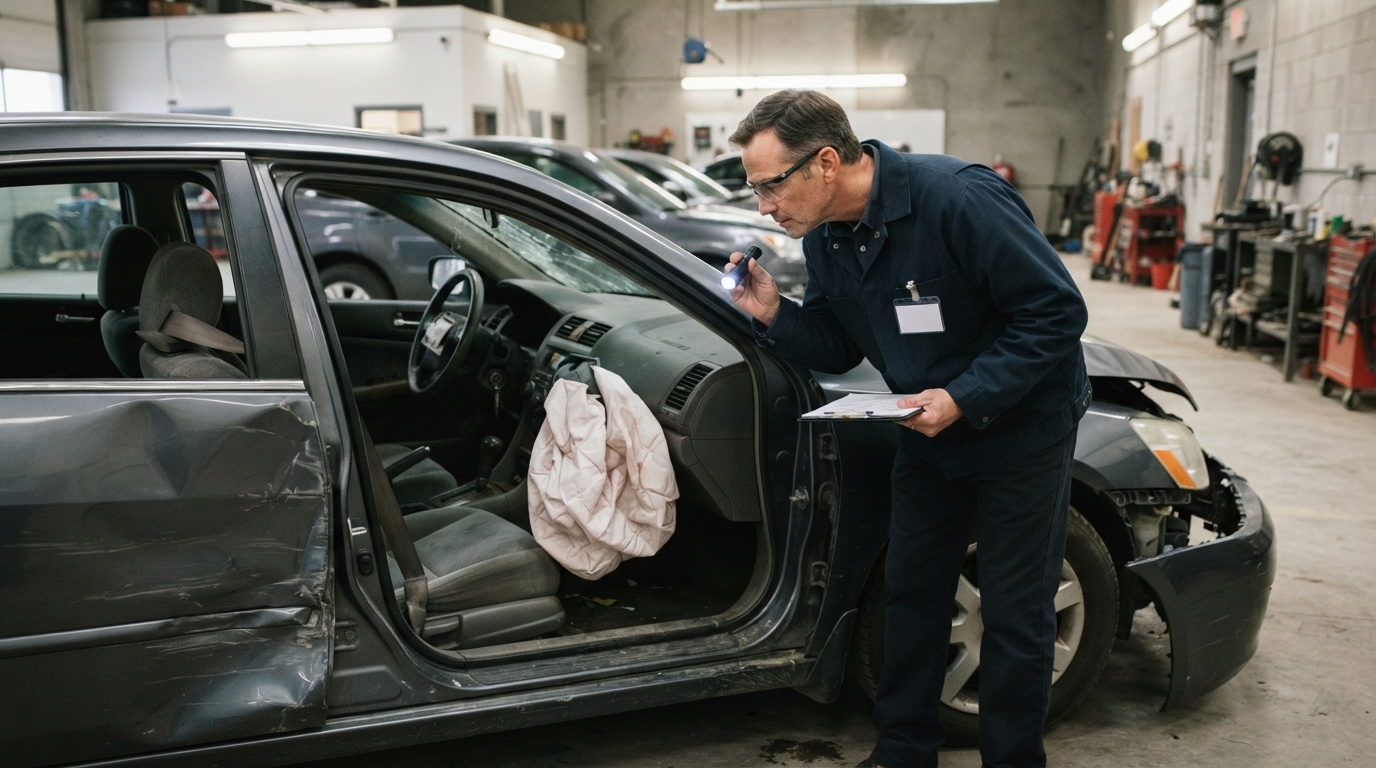
Defective airbag injuries have become an urgent vehicle-safety issue in 2026. In September, federal safety officials issued another warning about dangerous replacement airbag inflators that can rupture during a crash instead of protecting the person behind the wheel.
The concern involves replacement inflators marked DTN60DB. The National Highway Traffic Safety Administration, or NHTSA, says these inflators have been linked to 11 deaths and three severe injuries in the United States.
The issue is especially important for used-car owners. Every known incident involved a vehicle whose original driver-side airbag inflator had already been replaced after an earlier crash. That means the history of a used vehicle can matter long after the visible collision damage has been repaired.
A buyer may see clean paint, straight body panels, and a normal dashboard. However, a previous crash repair may have included an unsafe replacement part that remains hidden inside the steering wheel.
This article explains the current federal warning, why previous crash history matters, what evidence to preserve after an airbag injury, and how a defective replacement part can complicate an accident claim.
Why Defective Airbag Injuries Are a 2026 Safety Issue
Airbags are designed to reduce serious injuries during a collision. Sensors detect a qualifying impact, and the inflator rapidly fills the airbag so it can cushion the occupant.
A defective inflator can create the opposite result. NHTSA says the banned DTN60DB inflators can explode when they activate. The rupture can send metal fragments toward the driver or passenger.
Those fragments can cause severe injuries to the face, eyes, neck, chest, and other parts of the body. In some reported cases, the underlying collision may otherwise have been survivable.
That creates an unusual accident investigation. Investigators must examine not only why the vehicles crashed, but also whether the safety equipment caused additional harm.
NHTSA’s DTN60DB Warning Focuses on Replacement Airbags
NHTSA’s September 2026 alert followed another fatal incident involving a replacement DTN60DB inflator. The latest reported death involved a 2018 Chevrolet Equinox. Previous deaths and serious injuries involved Chevrolet Malibu and Hyundai Sonata vehicles.
The warning does not mean every Equinox, Malibu, or Sonata has this inflator. The problem involves specific replacement equipment installed after an original airbag deployment.
NHTSA had already banned the importation and sale of the DTN60DB inflators earlier in 2026. The agency concluded that the equipment creates an unreasonable risk of serious injury or death.
You can review the federal safety warning through NHTSA’s official consumer alert about the banned replacement airbag inflators.
Used Vehicles With Prior Crash History Need Extra Attention
NHTSA urges people to learn the repair history of used vehicles. That advice matters most when the vehicle experienced a previous crash that caused an airbag deployment.
The agency specifically recommends an inspection when a vehicle had an airbag deploy in a crash since 2020 and a manufacturer’s dealership did not perform the repair.
A vehicle-history report can provide a useful starting point. It may show previous collision damage, insurance claims, salvage history, or major repairs. However, a history report may not identify the exact airbag inflator installed during the repair.
Repair invoices can provide better detail. Ask for records that show where the work occurred and which replacement components the shop installed.
If you recently purchased a used vehicle with a significant accident history, do not assume the safety system uses original-equivalent parts simply because the airbag warning light is off.
Do Not Try to Inspect an Airbag Inflator Yourself
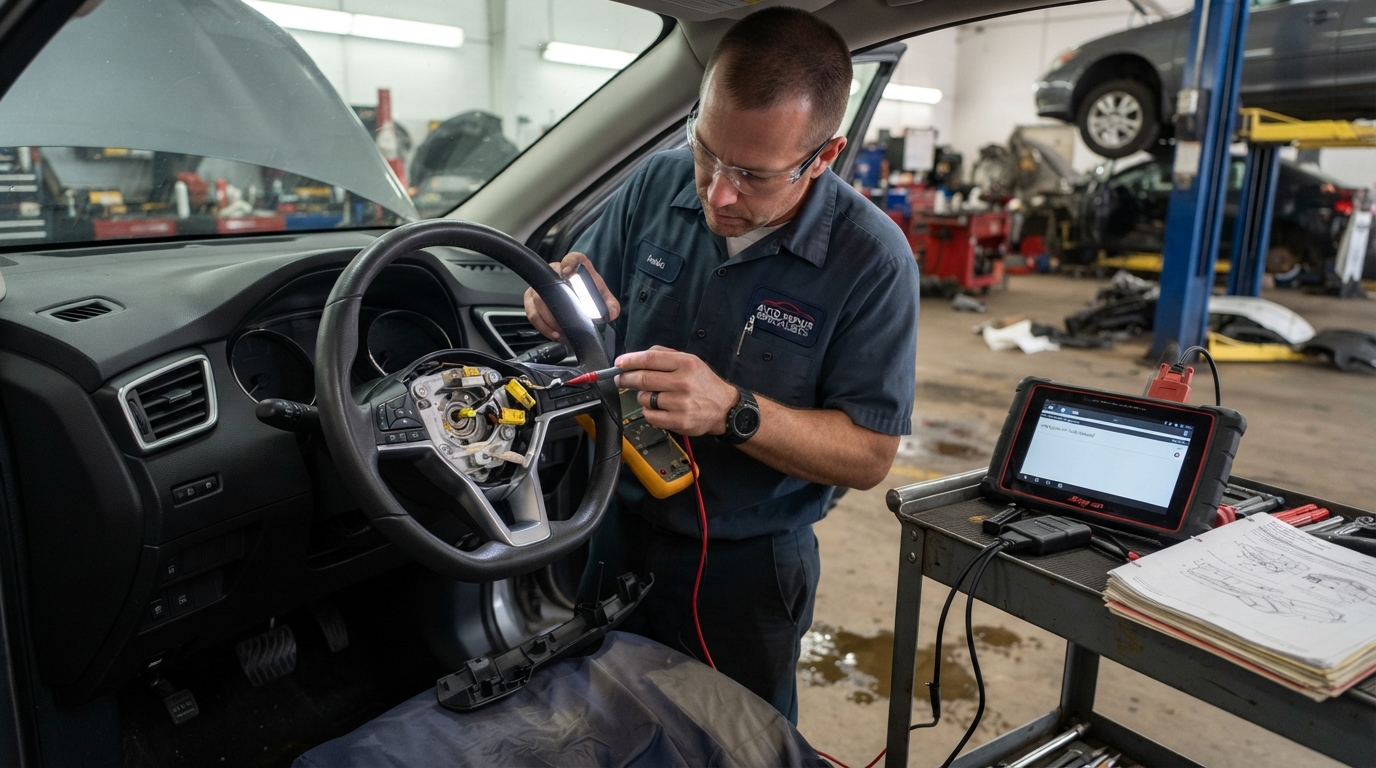
An airbag system contains components that can deploy with substantial force. Owners should not open the steering wheel or attempt to identify the inflator themselves.
NHTSA advises owners to use a reputable mechanic for the inspection. If an inspection identifies a DTN60DB inflator, the agency says the vehicle should not be driven until a genuine replacement part is installed.
This is a safety issue, not a normal do-it-yourself repair. Improper handling can create additional risk.
Keep any inspection report, repair estimate, photographs, parts information, and invoices. These records may become important if you later need to show what equipment the vehicle contained.
A Defective Replacement Part Can Complicate Accident Liability
A normal car accident claim often starts with driver behavior. Investigators look at speed, right of way, distraction, braking, traffic signals, and other factors that caused the collision.
A defective airbag case can add a second question: what caused the additional injury after the impact occurred?
For example, another driver may cause the crash while a defective replacement inflator causes serious facial injuries. Those events can involve different evidence and potentially different responsible parties.
Depending on the facts, an investigation may examine the repair shop, parts supplier, importer, seller, or other businesses connected with the replacement component. Their involvement does not automatically establish liability. The evidence must show what part was installed, who supplied it, and how the injury occurred.
Repair Records Can Become Critical Evidence
After a serious crash, preserve more than the police report. The repair history of the injured person’s vehicle may matter just as much.
Useful records can include old collision estimates, dealership records, body-shop invoices, airbag replacement invoices, vehicle-history reports, parts numbers, warranty documents, and communications with previous owners.
The current crash may also produce valuable digital evidence. Event data recorder information can sometimes help show impact severity, braking, seat belt use, and other details before the collision.
For more on preserving modern vehicle evidence, read our guide to California dashcam and black box evidence in 2026.
What to Do After a Crash Involving a Suspected Defective Airbag

Medical care comes first after a serious airbag injury. Metal-fragment injuries can cause bleeding, eye damage, facial injuries, neck trauma, and other serious harm.
Tell emergency providers how the injury occurred. If the airbag appeared to rupture or release metal fragments, mention that detail. Medical records that describe the mechanism of injury can become important later.
Photograph visible injuries when it is appropriate to do so. Continue documenting changes during recovery. Some injuries may require surgery, specialist treatment, rehabilitation, or long-term care.
Do not focus only on the airbag and ignore the underlying crash. Preserve scene photos, witness information, police reports, dashcam footage, repair estimates, and insurance correspondence as well.
Preserve the Vehicle and the Airbag System
The damaged vehicle can become one of the most important pieces of evidence. If a defective airbag may have contributed to the injuries, avoid rushing to destroy, salvage, or extensively repair the vehicle before the relevant components can be examined.
Tell the insurance company and repair facility that the airbag system may be relevant evidence. Keep written records of those communications.
Photograph the steering wheel, deployed airbag, dashboard, interior, exterior collision damage, and any visible fragments. Do not touch sharp debris or try to dismantle the airbag assembly.
If someone removes the airbag equipment for a professional inspection, document who removed it, when it happened, and where the component went afterward.
Do Not Let Important Parts Disappear During the Insurance Process
Vehicle claims can move quickly. An insurer may declare a badly damaged car a total loss and send it to a salvage facility. A body shop may discard deployed airbags and damaged components during repairs.
That normal process can create a serious evidence problem when a product defect is suspected.
Preservation should happen before important components disappear. Photos help, but the actual inflator, airbag module, steering-wheel components, and related parts may contain information that photographs cannot capture.
The same principle applies to paperwork. Save every repair invoice and parts record you can find. Do not discard documents simply because they relate to an older crash.
Accident victims should also avoid other common claim mistakes. Our guide to common mistakes when filing an accident claim explains why delayed medical care, missing evidence, and rushed settlements can weaken a case.
Insurance is another issue to review carefully. The driver who caused the collision may have liability coverage, but severe injuries can exceed basic policy limits. Other claims may involve additional insurance or responsible businesses depending on the facts.
For California accidents, see our article on California’s 30/60/15 minimum auto insurance limits in 2026. A minimum policy may not cover the full cost of surgery, permanent injuries, lost income, or long-term treatment.
Defective airbag injuries create a different kind of accident case because the collision and the safety-system failure may both contribute to the harm. That makes vehicle preservation especially important.
The latest NHTSA warning also gives used-car buyers a practical lesson. A previous accident does not end when the body shop returns the vehicle. The quality and origin of replacement safety parts can matter years later.
If your vehicle had an airbag deploy during a previous crash, learn how the repair was completed. If the history is unclear, follow NHTSA’s recommendation and have the system inspected by a reputable professional.
After an injury, protect both your health and the evidence. Obtain medical care, preserve the vehicle, collect repair records, document the current crash, and avoid allowing critical parts to disappear before the cause of the airbag failure is understood.
This article provides general educational information and is not legal advice. Product liability, negligence, insurance coverage, evidence preservation, and filing deadlines depend on the specific facts and jurisdiction.