
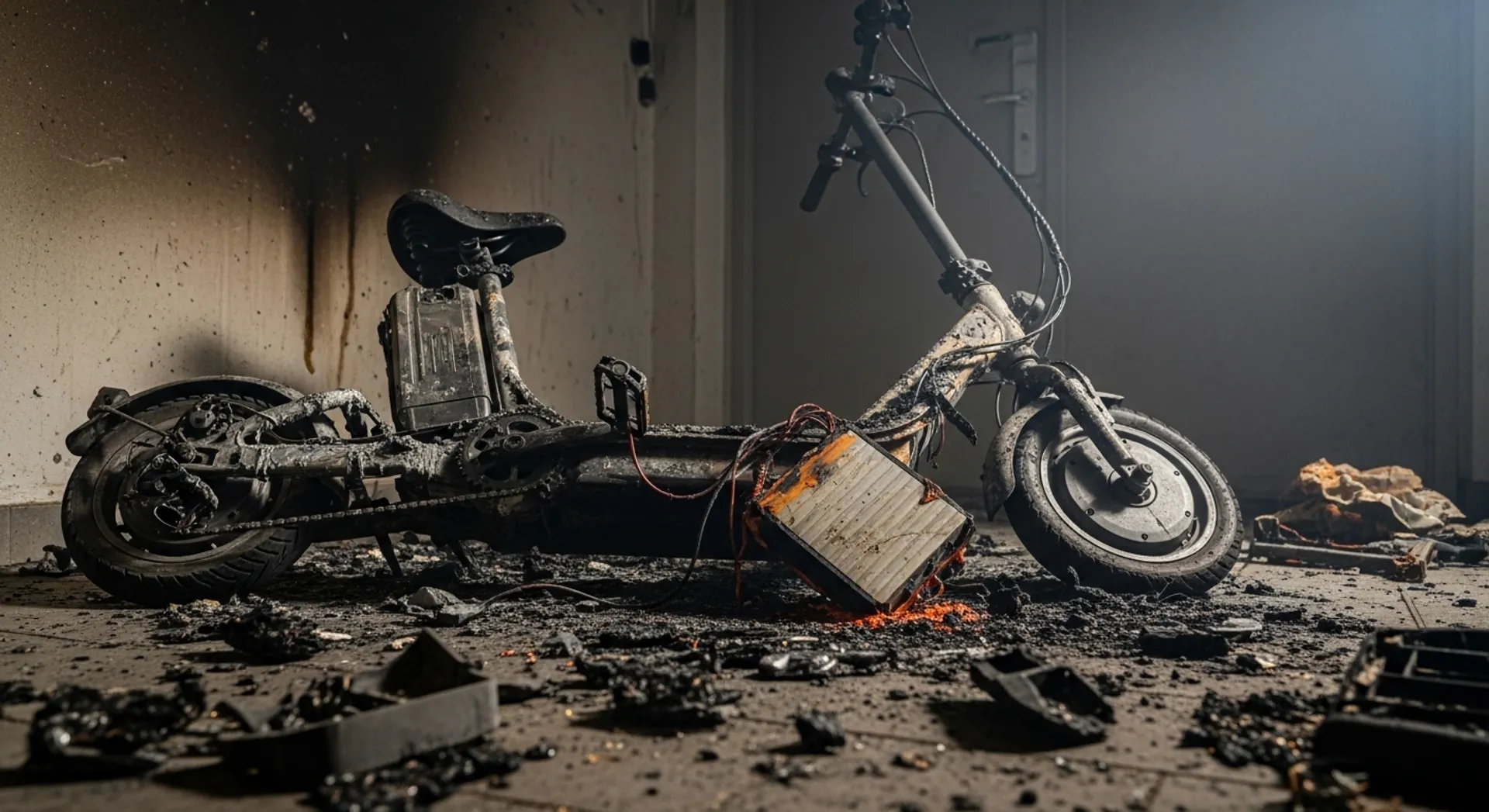
Most accident victims expect injury cases to start with a crash, a fall, or some other sudden impact. But not every serious injury follows that pattern. In 2026, more injury claims involve products that overheat, ignite, or explode while charging. That is especially true with e-bikes, e-scooters, battery packs, and other electric mobility devices. If you are dealing with a lithium battery fire injury claim California, the case may involve product liability, negligence, or both.
Lithium-ion batteries power a huge range of devices. When they work correctly, most people never think about them. When they fail, the results can be violent. A battery pack may spark, overheat, enter thermal runaway, and spread flames quickly. Federal safety regulators have warned that e-bike and e-scooter battery incidents can create fast-moving fires and deadly smoke conditions, especially inside homes, garages, and apartment buildings.
This is not theoretical. Recent reporting from California described a fatal apartment fire in San Jose that officials linked to an e-bike battery after the battery reportedly began smoking and sparking. Officials warned that these events can produce toxic gases and escalate too quickly for occupants to handle safely on their own. Cases like that show why battery-related injuries cannot be dismissed as random household mishaps.
Why Battery Fire Injury Cases Are Different From Ordinary Accident Claims
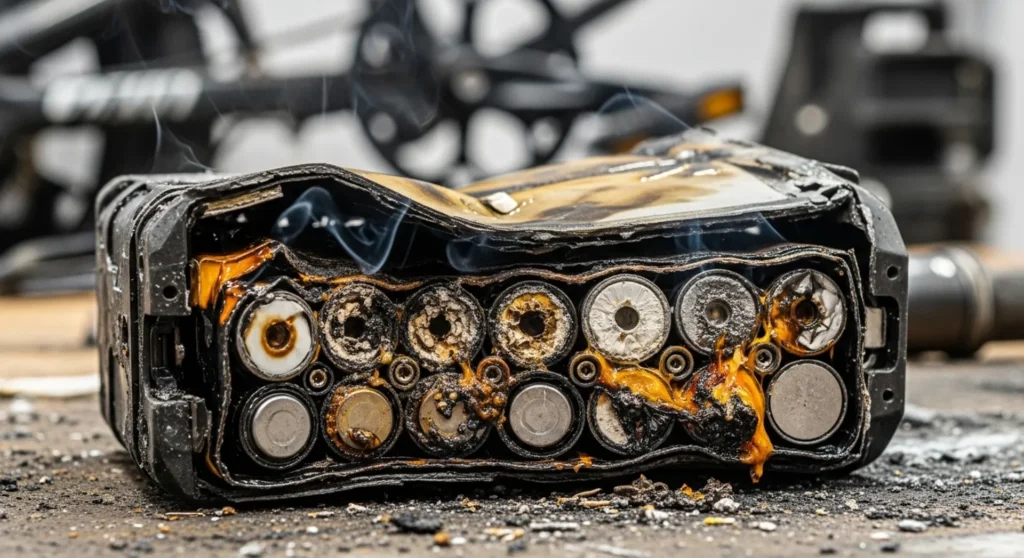
A normal accident case often focuses on careless conduct. Did the driver speed? Did the property owner ignore a hazard? Did someone fail to use reasonable care? Battery fire cases can involve negligence too, but many also turn on whether the product itself was defective.
These Claims Often Move Into Product Liability Fast
If a battery overheats during ordinary use, the legal question may shift away from user behavior and toward product failure. Was the battery defectively designed? Was it poorly assembled? Did the charger or battery-management system fail? Were the warnings weak or misleading? Those questions matter because a dangerous product can create liability even when the user was doing nothing obviously wrong.
This makes lithium-battery fire content a strong fit for accident-attorney.net. The site already covers modern injury topics involving technology, evidence, and changing liability theories. A battery-fire article extends that same theme into the product-liability space without overlapping the current car-accident and hit-and-run posts.
The Battery Is Not Always the Only Defective Part
People often assume the battery alone caused the fire. That may be true, but it is not the only possibility. The charger, adapter, connector, wiring, enclosure, battery-management system, or overall device design may all play a role. Some cases also involve counterfeit parts or incompatible aftermarket chargers that create a hidden risk.
That is why preserving the remains of the device matters so much. A case investigator may need the battery pack, charger, and damaged components to figure out whether the problem came from the cell design, the charging system, a manufacturing defect, or a dangerous mismatch of parts.
Smoke Inhalation and Secondary Trauma Matter Too
Battery-fire victims do not suffer only burns. Many also inhale toxic smoke, fall while escaping, suffer eye injuries, or develop respiratory complications that worsen after the event. Fire officials and safety regulators have repeatedly warned that these incidents can release harmful gases and spread too quickly for safe do-it-yourself response. Those facts matter because the damages in these cases often go well beyond what people assume when they hear the phrase “battery fire.”
More Than One Party May Be Legally Responsible
Battery-fire cases often have a wider liability chain than ordinary accidents. Depending on the facts, responsibility may involve the battery manufacturer, the device maker, an importer, a distributor, an online marketplace seller, a charger manufacturer, a rental fleet operator, or a repair shop that installed the wrong component.
That is one reason these cases should not be handled like simple property-damage claims. A landlord, tenant, rider, or consumer may all be part of the factual picture, but the central issue may still be whether a dangerous product entered the market and injured people who reasonably trusted it.
What Victims Should Do After a Lithium-Ion Battery Fire
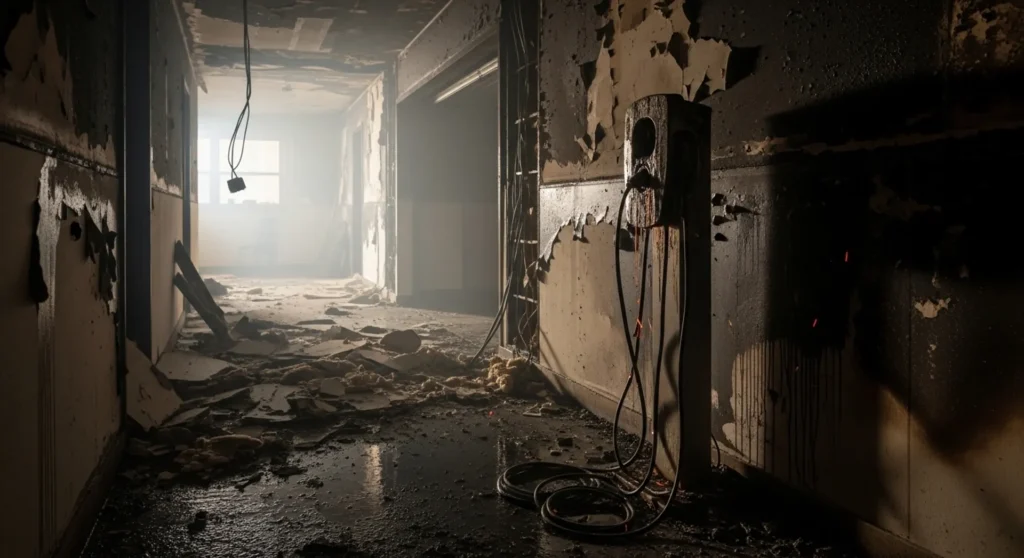
The first step is always medical care and emergency response. After that, the next priority is evidence. Battery fire cases can weaken quickly if the device gets discarded, the scene gets cleaned too aggressively, or the key product records disappear.
Preserve the Device, Charger, and Purchase Records
Do not throw away the burned battery, charger, or device if it is safe to keep them. Photograph the remains before anyone moves them. Save receipts, packaging, warning labels, manuals, online listings, shipping confirmations, and product serial numbers. If the device came through a marketplace seller, capture the seller information and product page right away.
That evidence can make the difference between a vague story and a usable legal claim. Product cases depend on identifying exactly what failed, who sold it, and whether the warnings or components created an unreasonable danger.
Document the Charging Setup and Fire Pattern
Take photos of the outlet, extension cords, charging area, surrounding walls, scorch marks, smoke patterns, and any nearby objects that caught fire. If the incident happened in a garage, apartment hallway, or storage area, document the space before repairs begin. Those details may help experts determine how the fire started and how quickly it spread.
Witness statements matter too. People often see smoke, hear popping sounds, or notice unusual charging behavior before a full fire erupts. Those observations can become valuable later.
Do Not Accept “User Error” as the Final Answer Too Early
Manufacturers and insurers often point to misuse quickly. Sometimes they are right. Sometimes they are using a common defense line before anyone has reviewed the actual evidence. A person may have used the product in a perfectly ordinary way and still been harmed by a battery defect, an unsafe charger, or a poor warning system.
The issue is not whether user conduct can matter. It can. The issue is whether that explanation is real or just convenient. Battery-fire cases deserve more than a guess.
Why This Topic Is Timely for 2026
California’s broader 2026 traffic and e-bike law coverage already shows the state is tightening rules around e-bike equipment, safety, and battery-related standards. That reflects a bigger reality: micromobility and battery-powered devices are now common enough that lawmakers, regulators, and courts cannot treat battery failures as isolated freak events. They are part of a growing safety problem.
That makes this a strong addition to accident-attorney.net. The site already publishes on modern claim strategy, technology-related accident issues, and compensation challenges. A lithium-battery fire article adds a fresh but closely related product-injury topic that connects well with the site’s existing legal-update style.
The bottom line is straightforward. A lithium-ion battery fire can become a legal case when the injuries tie back to a defective product, unsafe charging system, poor warnings, negligent maintenance, or another preventable risk in the chain. Victims should not assume that a fire in a garage, hallway, or charging area was “just one of those things.” Sometimes it was. Sometimes it was a product failure waiting to happen.
For external authority links, you can point readers to recognized battery-safety guidance and current California reporting on e-bike and traffic-law changes that reflect the broader safety concern.