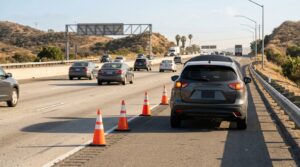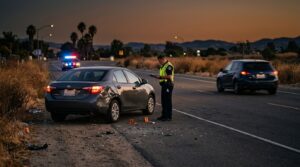
The California Move Over law 2026 introduces an important change for drivers, stranded motorists, roadside workers, and accident victims. Beginning January 1, 2026, Assembly Bill 390 expanded California’s existing requirement to move over or slow down when approaching certain stationary vehicles along a highway.
Previously, many motorists associated this protection primarily with emergency responders, tow trucks, and highway maintenance vehicles. The expanded law also covers other stationary vehicles displaying flashing hazard lights or qualifying warning devices, including cones and flares.
This change matters because roadside collisions can cause serious injuries. A person standing beside a disabled vehicle may have little protection from approaching traffic. Even a minor mechanical breakdown can become a dangerous situation when another driver fails to respond appropriately.
For accident victims, AB 390 may influence how investigators evaluate driver behavior, fault, and responsibility. However, violating a traffic law does not automatically guarantee compensation. An injury claim still requires evidence connecting negligent conduct to the accident and resulting damages.
This guide explains the expanded law, common roadside accident scenarios, important evidence, and practical steps for protecting an injury claim in California.
What Changed Under California’s Move Over Law in 2026?
Assembly Bill 390 amended California Vehicle Code Section 21809. The law requires drivers approaching qualifying stationary vehicles to exercise caution and create additional separation from roadside hazards when it is safe and practicable to do so.
According to the California Highway Patrol, the 2026 expansion covers highway maintenance vehicles and other stopped vehicles using flashing hazard lights or warning devices such as cones, flares, or reflective equipment.
The central requirement is straightforward. When approaching a qualifying stopped vehicle, a motorist should move into an available lane that is not immediately adjacent to it, provided the maneuver is safe and lawful.
If changing lanes would be unsafe or impracticable, the driver must reduce speed to a reasonable and prudent level appropriate for existing road, weather, and traffic conditions.
The law does not require a dangerous lane change. Drivers must evaluate nearby vehicles, available space, visibility, and roadway conditions before moving.
Which roadside vehicles receive protection under AB 390?
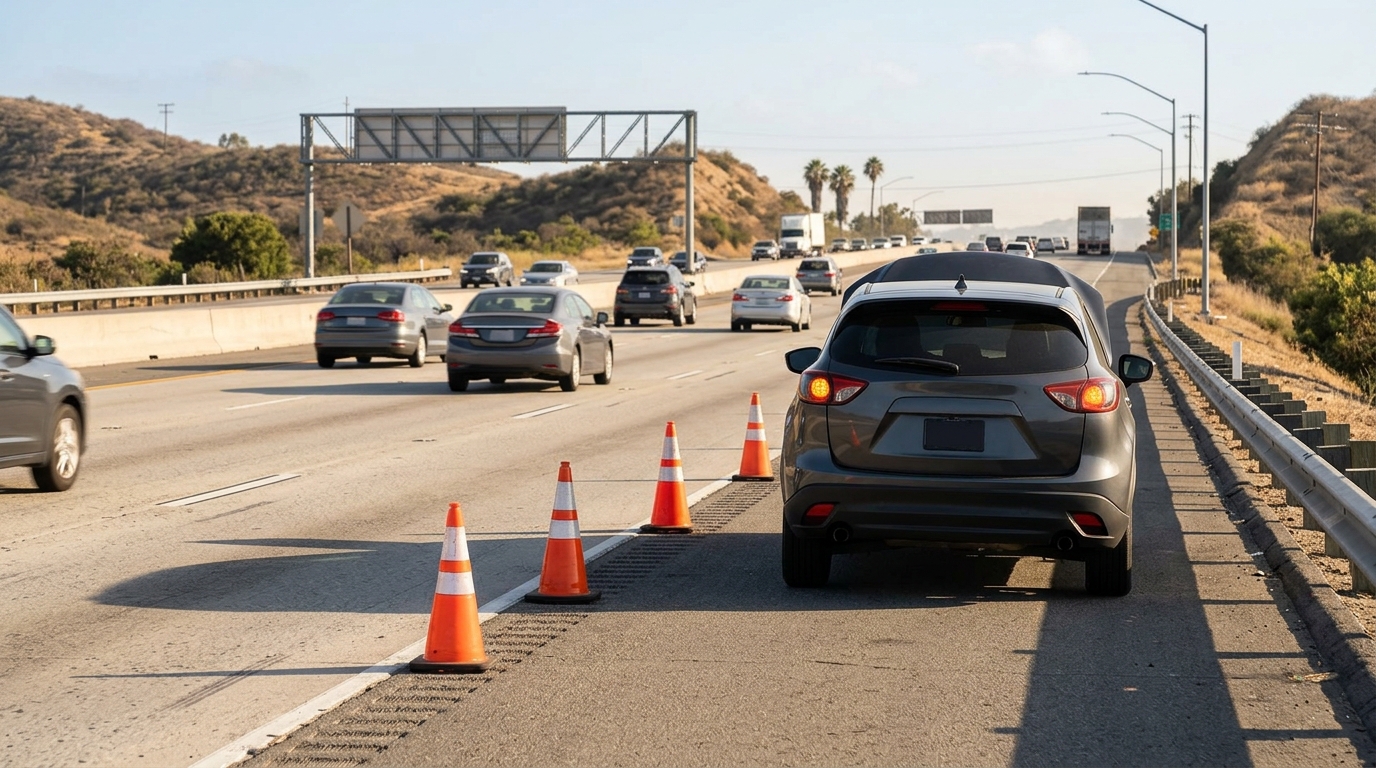
The expanded rule protects more than traditional emergency vehicles. Its application can include police vehicles, ambulances, fire engines, tow trucks, marked highway maintenance vehicles, and ordinary passenger vehicles stopped alongside a highway while displaying qualifying warnings.
For example, a family whose car becomes disabled on the shoulder may activate its hazard lights while waiting for assistance. Approaching drivers should respond according to the requirements of Vehicle Code Section 21809.
Similarly, drivers encountering roadside warning cones or flares should recognize that people, equipment, or disabled vehicles may be nearby.
The statute contains limitations, including situations where the stationary vehicle is not adjacent to the highway or is separated from traffic by a protective physical barrier.
Determining whether the law applied to a particular accident requires examining the exact location, warning equipment, and surrounding circumstances.
Why flashing hazard lights and warning devices matter
Hazard lights, cones, and reflective devices warn approaching motorists that unusual conditions exist. They may indicate a mechanical breakdown, emergency assistance, maintenance activity, or another roadside danger.
When investigators examine a collision, these warnings may help establish whether an approaching driver had an opportunity to recognize the hazard and react.
Useful evidence can include photographs showing activated lights, the position of cones, the roadway layout, and visibility from the approaching driver’s perspective.
However, a warning device alone does not resolve every question about fault. Investigators must still consider whether the driver could reasonably see the warning and respond safely.
When slowing down is safer than changing lanes
Moving into another lane is not always possible. Heavy traffic, nearby vehicles, construction barriers, and limited visibility may prevent a safe lane change.
In these circumstances, California law requires drivers to slow to a reasonable and prudent speed for the conditions. The statute does not establish a universal requirement to drive exactly 20 miles per hour below the posted limit.
The appropriate speed depends on the situation. Rain, darkness, traffic density, road width, and the presence of pedestrians may affect what is reasonably safe.
Drivers should also avoid abrupt braking that creates unnecessary danger for vehicles behind them. Early observation and gradual speed adjustments help reduce that risk.
For official information, review the California Highway Patrol’s 2026 traffic law announcement.
How the expanded law may affect accident liability
When a moving vehicle strikes a stopped vehicle or someone standing nearby, investigators may examine whether the approaching driver complied with the Move Over law.
Potentially relevant conduct includes failing to change lanes when a safe opportunity existed, passing at an unreasonable speed, driving while distracted, or ignoring visible warning devices.
California Evidence Code Section 669 establishes a framework under which violation of a qualifying statute may create a presumption of negligence when additional legal requirements are satisfied.
Those requirements include whether the violation caused the injury and whether the injured person and type of harm fall within the statute’s protective purpose.
A statutory violation is therefore important evidence, but it should not be treated as an automatic determination of liability.
Can both drivers share responsibility?
California generally follows a pure comparative negligence system. This means responsibility may be allocated among parties according to their respective contributions to an accident.
Consider a situation where a motorist approaches a disabled vehicle with visible hazard lights. The approaching driver fails to slow down, but another participant may also have acted carelessly.
Investigators would need to evaluate each person’s actions and determine whether those actions contributed to the collision.
Comparative fault can affect the compensation recoverable by an injured person. The allocation depends on evidence rather than assumptions about which vehicle was moving or stopped.
Our article on road rage accident claims in 2026 discusses how aggressive driving, unsafe maneuvers, and disputed conduct can influence fault analysis.
What Injured Motorists Should Know About Roadside Accident Claims
Roadside collisions can produce severe injuries because people may be outside their vehicles when an impact occurs. Drivers changing tires, tow operators securing vehicles, and passengers waiting for assistance may be especially exposed.
Possible injuries include fractures, traumatic brain injuries, spinal injuries, internal trauma, and serious soft-tissue damage.
When an accident causes significant harm, medical treatment should take priority. The injured person’s condition may prevent immediate evidence collection, so witnesses and other available records can become particularly important.
After the immediate emergency, the central legal questions usually concern fault, causation, insurance coverage, and the extent of documented damages.
California’s minimum automobile liability insurance requirements increased in 2025 to $30,000 for bodily injury to one person, $60,000 for bodily injuries in one accident, and $15,000 for property damage. These limits remain relevant in 2026.
However, minimum coverage may be insufficient for a severe roadside injury. Additional insurance coverage and potentially responsible parties may need investigation.
Evidence that can strengthen a roadside collision investigation
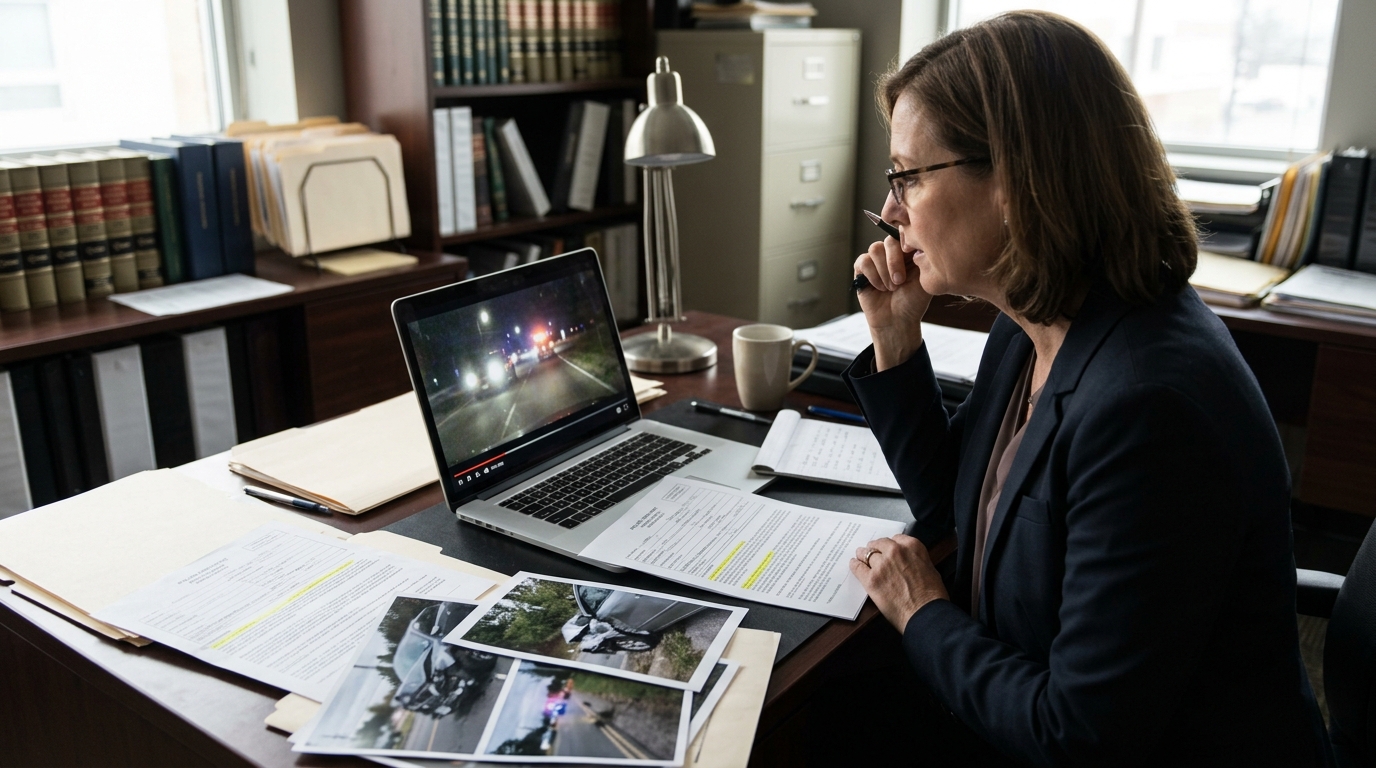
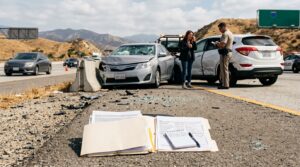
Photographs, witness statements, police reports, vehicle damage, medical records, and electronic data may help reconstruct what happened before a roadside impact.
Photographs should show the stopped vehicle’s location, roadway shoulder, lane markings, warning equipment, lighting conditions, and surrounding traffic controls.
Dashcam footage may reveal whether the approaching driver changed lanes, reduced speed, or responded to visible warnings.
Event data recorders in some vehicles may capture selected information about speed, braking, and other parameters during a qualifying crash event.
Not every vehicle records the same information, and access to electronic evidence may require specialized procedures. Our guide to California dashcam and black box evidence in 2026 explains how digital records may support crash investigations.
What to do immediately after a roadside accident
First, move to a safe location if possible without worsening injuries. Remaining beside active highway traffic can expose victims to additional collisions.
Call emergency services when injuries, dangerous traffic conditions, or other immediate hazards require assistance. Follow instructions from responding officers and emergency personnel.
Seek medical evaluation for concerning symptoms, including head injuries, severe pain, dizziness, weakness, or difficulty breathing.
When safe, document vehicle positions, warning lights, road conditions, and visible damage. Identify witnesses and record their contact information.
Preserve relevant photographs, videos, medical documents, receipts, and insurance correspondence. Avoid guessing about fault when speaking with investigators or insurers.
California personal injury lawsuits generally have a two-year limitations period, although exceptions and shorter government claim procedures may apply.
Because some evidence disappears quickly, prompt investigation may be important even when the lawsuit deadline is considerably later.
Insurance issues also deserve attention. The responsible driver’s policy may have limited coverage, and serious injuries can generate expenses beyond those limits.
Read our article on California minimum auto insurance limits in 2026 for additional background on why mandatory coverage may not fully compensate someone after a serious collision.
If a commercial truck, service vehicle, or employer-owned vehicle was involved, additional insurance and responsibility questions may arise. Driver employment status, vehicle maintenance, company policies, and commercial insurance arrangements can influence the investigation.
Victims should preserve employment records and loss-of-income documentation when injuries interfere with their ability to work.
Finally, responsible driving remains the best prevention strategy. Watch for roadside warning lights, maintain enough following distance to anticipate hazards, and create additional space whenever a safe lane change is available.
Never assume a stopped vehicle is empty. Someone may be changing a tire, providing assistance, or moving between the vehicle and the shoulder.
The California Move Over law 2026 reinforces the responsibility to protect people exposed to traffic near stationary vehicles. Its expanded application makes roadside awareness relevant to nearly every driver using California highways.
For injured motorists, understanding AB 390 can help identify relevant evidence and legal questions. However, every injury claim must be evaluated individually, considering statutory requirements, causation, comparative fault, and available insurance coverage.
Disclaimer: This article provides general educational information and does not constitute legal advice. Consult a qualified California attorney for guidance concerning specific injuries, filing deadlines, and potential claims.