

Readers researching car declared a total loss after a crash need practical distinctions, reliable sources and a clear next step. The answer often depends on the circumstances, what can be verified and which professional or official instructions apply. This insurance & accident settlements guide focuses on the decision points people can actually investigate, rather than promising a universal result.
It is easy to focus on an insurer’s first answer or a single legal term, but the useful questions are more specific: what happened, which rules apply, what evidence survives, and what deadlines are approaching? This guide explains the practical distinctions without claiming that the result of any individual case is predetermined.
How insurers decide that a vehicle is a total loss
A car declared a total loss after a crash creates a different set of questions from a repair estimate. The insurer may determine that repairs are uneconomical relative to vehicle value and applicable rules. The owner may still owe money on a loan, need transportation quickly, or disagree with the comparison vehicles used in the offer. These issues should be separated instead of argued as one complaint. An accurate timeline matters more than a dramatic description. Record what was known on the day, what became clear later, and who supplied each piece of information. An insurance position or police summary is not automatically the final legal finding. Keep originals, preserve uncertainty, and do not guess at missing details. For further context, review Accident Attorney articles.
Actual cash value generally concerns the vehicle’s value immediately before the loss, subject to applicable rules and policy language. It does not necessarily equal the purchase price, an outstanding loan balance or the sticker price of a new replacement car. State insurance guidance and insurer valuation reports explain what assumptions were used. Ask for the complete report, not only the offered number. Before relying on any general rule, check which jurisdiction, deadline, coverage agreement, and type of claim actually applies. A useful article should separate a possible legal theory from proof that its elements are satisfied. A legal professional can review whether exceptions or procedural prerequisites change the analysis.
Actual cash value is not a replacement-car quote
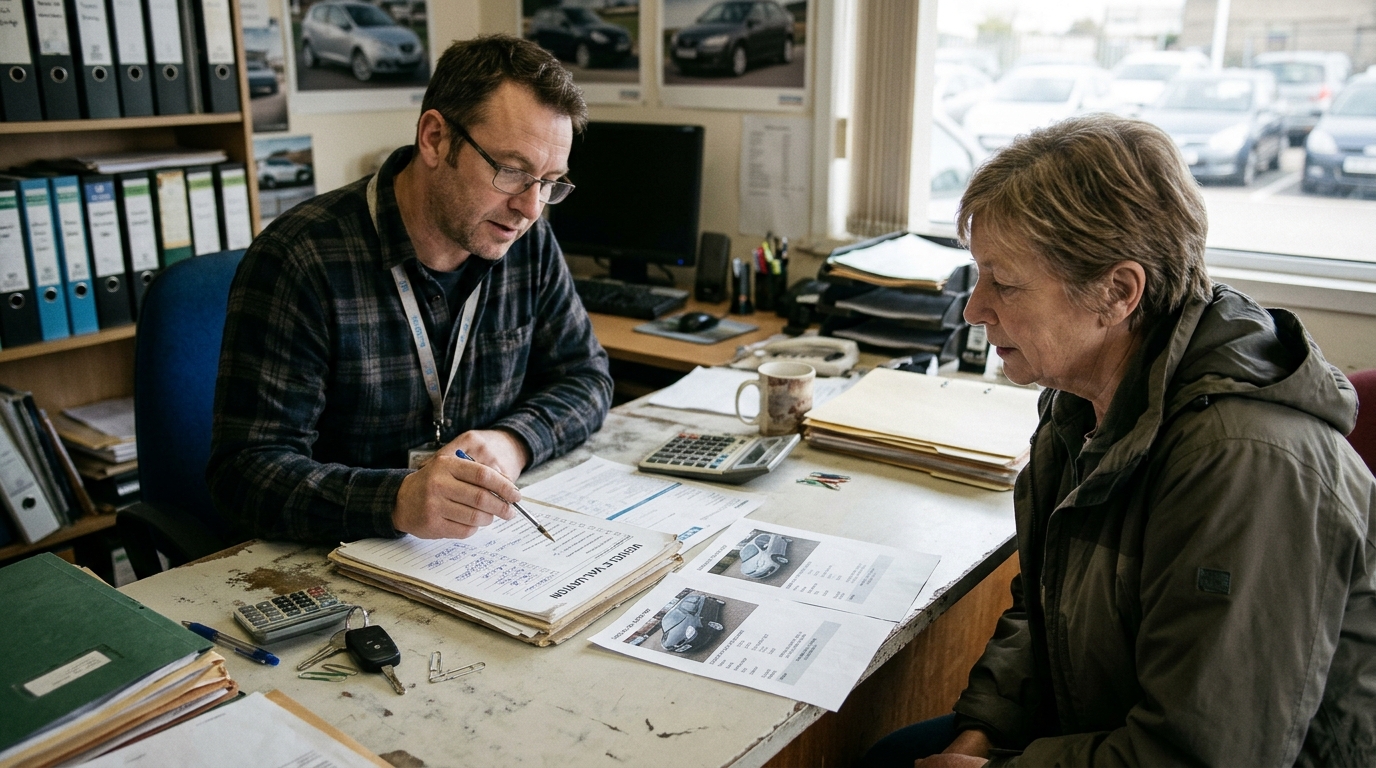
A valuation may compare vehicles with different mileage, trim, options, prior condition, or regional availability. Check each comparable for obvious mismatches. Keep your maintenance receipts and pre-crash photos when they legitimately show condition. Do not exaggerate upgrades or assume every modification increases market value; support an adjustment with reliable sales information. Build a folder containing dated photographs, correspondence, relevant policy pages, receipts, and a simple index. Save originals separately from annotated copies. A consistent record can help an independent reviewer understand the event without assuming that one screenshot or one witness statement tells the entire story.
Mileage and condition can change the comparison
An insurer may use repair estimates, salvage value and its own procedures to assess economic total loss. Specific thresholds and duties vary by state and policy. If your car has substantial safety-system damage, an apparently minor external impact may still produce expensive repairs. Seek a clear explanation of the decision instead of treating it as proof of fraud. Consider what an opposing explanation would look like. Were there multiple contributing causes, conditions that changed over time, or documents pointing in different directions? Testing a claim against those alternatives produces a more reliable picture than choosing the first explanation that feels intuitively correct.
Taxes, fees and policy terms need separate review
Sales tax, title fees, transfer costs, deductibles and the treatment of damaged accessories may be handled differently depending on jurisdiction and coverage. Read each line of the proposed payment statement. A first-party collision claim is not identical to a third-party property-damage claim, and the rights to challenge a calculation can differ. Avoid sharing sensitive records publicly or submitting unnecessary personal identifiers through unverified forms. Contact organizations through verified channels, document what was requested, and preserve confirmation numbers. Online resources can explain a process, but only a qualified professional who reviews your facts can advise on a particular case.
Keep the rental-car question separate from vehicle valuation. Coverage for a replacement rental, the length of an authorized rental period and reimbursement of transportation expenses may depend on the claim type and the insurer’s position. Ask for a written explanation before assuming rental coverage lasts until a replacement car is purchased.
Read the valuation report closely
If the vehicle is financed, ask how payment reaches the lender and whether the loan balance exceeds the actual insurance settlement. Guaranteed asset protection, if purchased, may have conditions and exclusions. Do not assume ordinary auto coverage automatically cancels debt. Obtain payoff figures in writing and keep records of each payment received. A single day rarely captures the whole consequence of an accident. Treatment may evolve, repairs may reveal hidden damage, and an employer may need updated work restrictions. Maintain dated records without exaggeration, and do not sign a broad release until the financial and legal implications are understood.
If the owner wants to keep the damaged car, salvage retention can change the amount paid and may trigger title, inspection or future insurance requirements. Do not decide only on sentimental value. Ask what the insurer proposes, what local title rules require and whether the vehicle can ever be safely returned to service.
How to review an offer without missing key details
Keep photographs of damage, the VIN, vehicle identification papers, maintenance history and the independent repair estimate. If the car may contain accident-relevant electronic data, discuss preservation with a qualified professional before release or salvage. Storage charges can accumulate quickly, so identify authorized next steps rather than allowing an indefinite delay. When there are conflicting statements, compare their timing and sources rather than labeling one person dishonest. Identify photographs, recordings, electronic records, and independent observations that may resolve the difference. Evidence is strongest when it is preserved lawfully and can be traced to its original source.
Handle liens, rental transportation and retained vehicles
If you disagree with the amount, send a concise, documented request for correction. Identify comparable listings that match model, year, mileage and features as closely as possible. Some policies contain appraisal procedures and some state regulators provide complaint or mediation information. Those options should be evaluated under the actual policy and state law. Write a short list of questions before speaking with a claims handler, agency, or lawyer. Ask which documents are missing, what response deadlines apply, and how decisions will be communicated. Keep a record of the answer and request important explanations in writing when practical.
Preserve the vehicle record before disposal

For example, two cars with the same model year may differ greatly because one has high mileage and missing equipment. A persuasive challenge explains each difference and supplies a verifiable source. A statement that replacement cars ‘all cost more now’ may be understandable, but it is less useful than a structured comparison. No article can promise a settlement amount or outcome. Legal standards, evidence, insurance contracts, and individual circumstances control the analysis. Use the guidance here as a preparation checklist, and seek case-specific advice before deadlines expire or a final agreement is signed.
Know when an independent valuation is appropriate
Older vehicles with unusual trim or low mileage can be difficult to compare. If local listings are scarce, ask how the insurer expanded the geographic area or adjusted comparable prices. Keep the dispute focused on accurate evidence, not on one inflated advertisement that has never resulted in a sale.
A disagreement about vehicle value should not prevent an owner from securing personal belongings and arranging safe transportation. Ask the insurer how property may be retrieved and whether a storage deadline is approaching. Keep salvage-yard communications in writing where possible; an unnecessary storage bill can become another dispute separate from the valuation itself.
Quick reader check: Is the decision based on the correct jurisdiction? Are source documents preserved? Is an important assumption being presented as certain? Which deadlines are confirmed, and which still need verification? These four questions can identify avoidable gaps before an insurer, agency or attorney makes a consequential decision.
For authoritative context, consult California Department of Insurance automobile claims mediation. Its scope and limitations should be considered alongside the specific facts; the link is not a substitute for professional or local instructions.
The best next step is a clear file and an accurate set of questions. Separate documented facts from assumptions, verify the governing deadlines and seek advice from a qualified professional when legal rights or settlement obligations are at stake. This article is general information, not individual legal advice or an offer of representation.